This platform functions as a Think Tank, Web Portal, and Research Institute. It explores how policy research and public knowledge can inform urban and regional development, strengthen natural resource governance, and advance consumer policy.
The website is organised into three core sections: Central, Segments, and Ecosystem Platforms.
The strength of SyedShayan.com lies in the wisdom and integrity of its Board.
Each member brings a unique perspective, professional depth, and a shared commitment to intellectual growth.
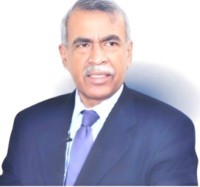
Sardar Arif Rasheed
Former Provincial Minister, Punjab
Irrigation, Agriculture, Forests and Tourism
Sardar Arif Rasheed is a senior Pakistani politician from a traditional landowning family with longstanding involvement in the politics of Punjab. He received his higher education in England and earned an MBA in 1958. After com...
Sardar Arif Rasheed is a senior Pakistani politician from a traditional landowning family with longstanding involvement in the politics of Punjab. He received his higher education in England and earned an MBA in 1958. After completing his studies, he returned to Pakistan and worked for a period at Attock Refinery before entering public life. His entry into politics was also influenced by his family’s political background. His father, Sardar Abdul Rasheed, was a prominent figure in Pakistan’s early political history and served as a Federal Minister during the government of President Ayub Khan.
Sardar Arif Rasheed emerged as an important figure in Punjab’s provincial politics during the 1980s. He was elected as a Member of the Provincial Assembly and later joined the Punjab cabinet following the non party elections of 1985, when Mian Muhammad Nawaz Sharif became Chief Minister of Punjab. At that time Lieutenant General Ghulam Jilani Khan was the Governor of Punjab and the country was under the leadership of General Muhammad Zia ul Haq. In the provincial cabinet he held several key portfolios simultaneously, including Agriculture, Irrigation and Power, Forestry, and Tourism and Culture. These departments were central to Punjab’s economy, particularly because the province’s development and agricultural productivity depended heavily on irrigation systems and natural resources.
During the same period Pakistan was actively considering major water infrastructure projects, including the Kalabagh Dam. At the provincial level several consultations, planning meetings, and administrative preparations took place regarding the project. As the minister responsible for irrigation related affairs, Sardar Arif Rasheed was involved in these discussions and supervisory processes within the Punjab government, particularly in matters concerning water management and long term agricultural development.
His ministerial tenure belongs to a significant phase in Punjab’s political history, when a new provincial leadership emerged after the 1985 elections and greater emphasis was placed on rural development and economic planning. In later years he gradually reduced his involvement in active politics, though he continued to be regarded as a respected and experienced public figure in political and social circles.
Brigadier Retired Abbas Ali Khan
Strategic Governance and Infrastructure Leadership
Expertise: Military Command, Public Sector Administration, Energy Distribution Systems, Water Resource Policy
Brigadier Retired Abbas Ali Khan brings to the Board of Governors a rare combination of military command experience,...
Expertise: Military Command, Public Sector Administration, Energy Distribution Systems, Water Resource Policy
Brigadier Retired Abbas Ali Khan brings to the Board of Governors a rare combination of military command experience, institutional administration, infrastructure leadership and policy level exposure across national and international platforms.
Commissioned in November 1971, he participated in the 1971 war in the Lahore sector. Over the course of a distinguished Army career, he commanded Infantry formations at multiple levels and served in key strategic appointments. As a Lieutenant Colonel, he commanded an Infantry unit and served as a Grade One Staff Officer at Division Headquarters and at the Infantry School Quetta, one of the Army’s premier training institutions. He later served at General Headquarters in the Military Secretary Branch, where he was responsible for career planning and postings of all Majors and below across the Pakistan Army, a role that required deep institutional understanding and personnel management oversight.
His international exposure includes service with the United Nations Mission in Bosnia from 1994 to 1995, initially as a Military Observer and subsequently as Mission Chief Logistics Officer, operating across five European countries during a complex post conflict environment.
At the rank of Brigadier, he commanded an Infantry Brigade and later transitioned into a major civilian leadership role as Chief Executive Officer and Managing Director of Multan Electric Power Company for more than five years. Leading an organisation covering the entire Southern Punjab region with approximately twenty seven thousand employees, he gained extensive experience in public utility governance, regulatory coordination, energy distribution management and large scale administrative reform.
Post retirement, Brigadier Abbas Ali Khan was engaged at the national level with the Ministry of Agriculture in the field of water management. Selected as one of three private sector consultants at the national level, he contributed to policy discussions and implementation frameworks relating to irrigation efficiency and water resource optimisation. He undertook independent study visits to the Netherlands, Turkey, Egypt and the United States to examine global best practices in water governance. He also represented Pakistan in official delegations to Turkey and Qatar for bilateral discussions on water resources cooperation.
He founded a private geo technology company specialising in geo grids and structural stabilisation solutions. The company executed water management and slope stabilisation projects across Balochistan, Sindh and Kashmir. During the devastating earthquake in Kashmir and the Northern Areas, his firm carried out critical slope stabilisation works along major communication routes, particularly around Muzaffarabad, contributing to infrastructure resilience in a post disaster environment.
From 2015 to 2017, he served as Director General at the Election Commission of Pakistan, becoming the first Army officer to be inducted into that role. This appointment reflects his credibility in institutional governance, regulatory processes and public administration.
Within SyedShayan.com, Brigadier Abbas Ali Khan contributes strategic insight on governance reform, infrastructure management, energy distribution systems, water resource policy, electoral administration and institutional accountability. His experience bridges defence leadership, civilian administration and national level policy execution, strengthening the Think Tank’s mandate to produce research grounded in operational reality and statecraft.
Dr. Ali Sajid
Director Leadership and Management Development Associates
Expertise: Management & Leadership, Corporate Trainer, Community Development Volunteer
Dr Sajid is a Corporate Trainer for both MNCs and Public Sector Organizations. He has taught and trained professionals across multiple ...
Expertise: Management & Leadership, Corporate Trainer, Community Development Volunteer
Dr Sajid is a Corporate Trainer for both MNCs and Public Sector Organizations. He has taught and trained professionals across multiple sectors.

 SEGMENTS
|
15 SECTIONS
SEGMENTS
|
15 SECTIONS