
Where Did the Electricity Go?
If this electricity was genuinely generated by sugar mill based Independent Power Producers IPPs, why did it fail to reach the national grid? Or was it instead consumed within the mills themselves? If that is the case, then on what basis were payments made despite the electricity not being supplied to the grid? And why were these payments not borne by the national exchequer, but instead passed on to ordinary consumers through their electricity bills?
▫
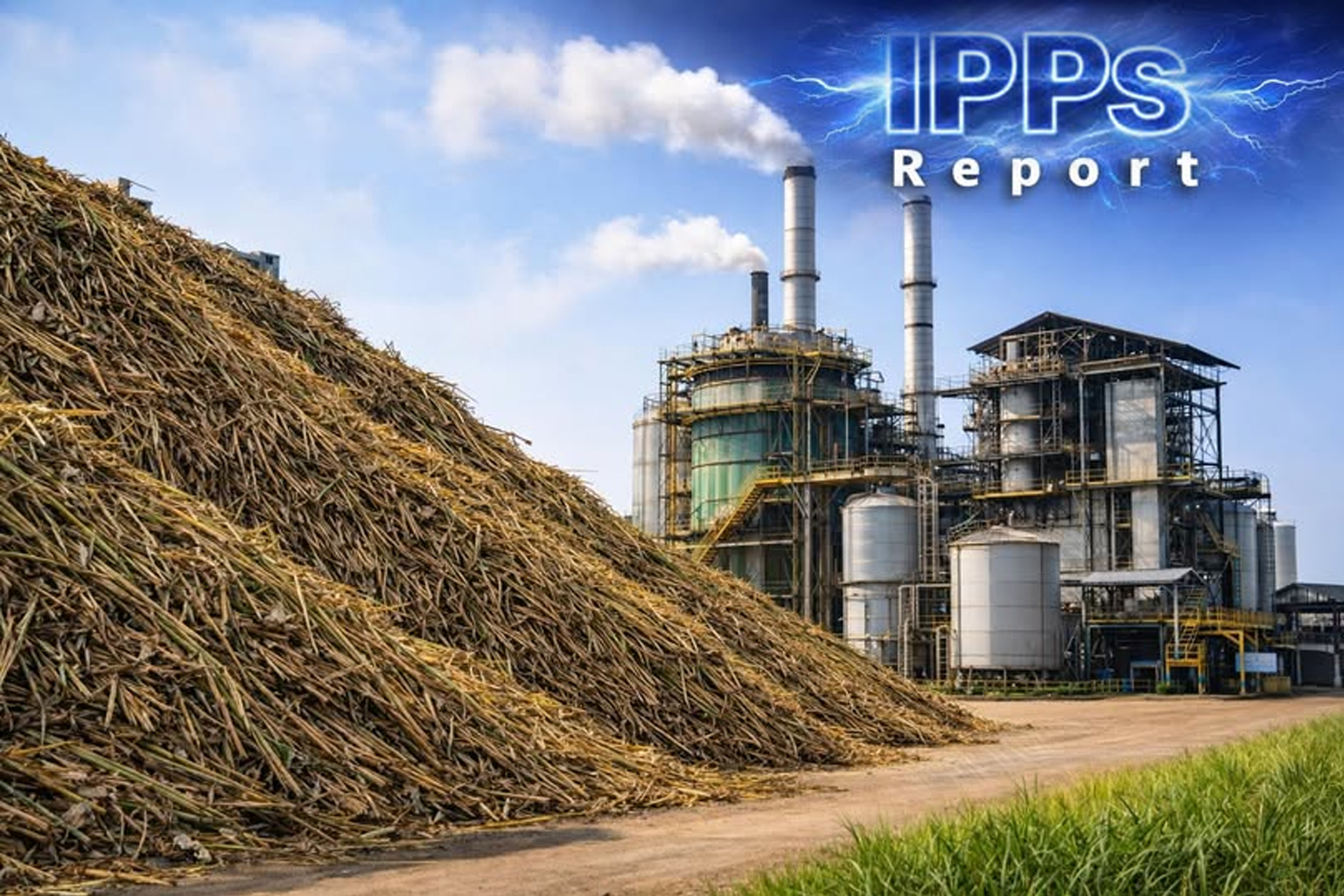
Sugar mills continued to procure sugarcane from farmers at relatively low prices, yet sought to assign disproportionate value to bagasse, the residual biomass of the same crop. Through regulatory forums, and in some cases the courts, attempts were made to secure recognition of this elevated valuation, thereby creating space for higher electricity tariffs.
▫
Would you accept that in 2025 the government paid between PKR 150 million and PKR 170 million per megawatt for electricity generated from bagasse?
These are facts that strain credibility.
🔲 National Investigative Series | Episode 9
Subject: How Can Pakistan’s Electricity System Be Fixed
[Understanding and Reducing High Electricity Bills]
Research and Writing: Syed Shayan
In Episode 8, we examined Pakistan’s bagasse based power plants linked to sugar mills, including their number, ownership structures, and the issue of capacity payments. When these projects are viewed collectively, however, another dimension emerges that reveals the true nature of the system.
Pakistan currently has approximately nine major bagasse based IPPs with a combined installed capacity of around 240 to 291 megawatts. On paper, these plants represent close to 300 megawatts of capacity. In practice, however, they deliver only an average of 70 to 80 megawatts to the national grid over the course of a year, while being compensated as though operating at full capacity.
It is often argued that only those sugar mills which undertook substantial investment in upgrading their systems were granted permission by NEPRA to supply electricity to the national grid. However, closer scrutiny reveals that what is presented as a “substantial investment” is, in reality, a technical enhancement of pre existing infrastructure within the mills. This typically involves converting low pressure boilers into high pressure systems, installing larger and more efficient steam turbines, and establishing the necessary transmission, synchronisation, and metering arrangements required for grid connectivity and surplus power sales.
Under regulatory requirements, a grid connected power plant must be capable of delivering a continuous and reliable supply. For this reason, NEPRA has tended to favour plants equipped with high pressure cogeneration systems and the theoretical capability to operate on alternative fuels such as coal or other inputs. Consequently, a limited number of sugar mills upgraded their systems, at least on paper, to meet these criteria and secured permission to supply electricity to the grid, while the majority remained confined to seasonal bagasse operations and did not qualify.
Despite these upgrades, the fundamental nature of these plants remained seasonal, as bagasse is only available during the sugarcane crushing season. Nevertheless, the Government, the Central Power Purchasing Agency CPPA G, and the National Electric Power Regulatory Authority NEPRA continued to make payments throughout the year on the basis of availability alone. A closer examination of these nine plants shows that it is inaccurate to classify them uniformly as hybrid facilities, as each differs in both technical design and regulatory treatment.
Let us briefly review these plants individually:
1. Chiniot Power Ltd
This project falls under a distinct and earlier regulatory framework, with subsequent adjustments made over time, and therefore does not fit neatly into the general category.
2. JDW Sugar Mills Ltd Unit II
A bagasse based plant with tariff provisions referencing alternative fuels, though it would be cautious not to describe it as operationally hybrid.
3. JDW Sugar Mills Ltd Unit III
Similar to Unit II, structured with an element of alternative fuel in its commercial framework, yet not fully hybrid in practice.
4. Al Moiz Industries Ltd
A bagasse based IPP with a tariff structure incorporating alternative fuel considerations, although its actual operations remain seasonal.
5. Chanar Energy Ltd
Another bagasse based plant with references to alternative fuels in its tariff framework, though not uniformly hybrid.
6. Thal Industries Corporation Ltd
A high pressure bagasse cogeneration plant designed with alternative fuel flexibility, yet fundamentally reliant on bagasse.
7. Hamza Sugar Mills Ltd
A bagasse based plant with a commercial structure allowing for alternative fuels, though its output remains largely seasonal.
8. RYK Mills Ltd
A bagasse based IPP with tariff elements linked to alternative fuels, but not fully hybrid in operational terms.
9. Shahtaj Sugar Mills Ltd
A smaller scale project developed under an earlier upfront tariff model, with a distinct tariff structure compared to others.
In summary, it is inaccurate to describe these projects uniformly as hybrid power plants. In reality, they are primarily seasonal bagasse based facilities, with alternative fuels failing to become a meaningful operational substitute. This is clearly reflected in the gap between expected output of around 290 to 300 megawatts and actual generation of only 70 to 80 megawatts, exposing a fundamental weakness in the model.
The sugarcane season itself is uneven. It begins in November with limited supply, leading to partial plant operation. December through February represent peak months, with higher supply and near full capacity utilisation. Output declines again in March and April, and from May to October, the absence of bagasse renders these plants largely inactive.
Even when operational, a significant portion of the electricity generated is consumed internally by the sugar mills for crushing, boiler operations, and other industrial processes. As a result, electricity supplied to the national grid remains limited and inconsistent throughout the year.
This raises a critical question. If these plants are unable to deliver electricity in line with their full installed capacity, on what basis are they granted capacity payments, separate tariff structures, dollar indexation, and elevated returns on equity?
The answer lies in the underlying design of Pakistan’s power sector. NEPRA and related institutions approve power plants based on installed capacity, that is, their designed potential output, rather than solely on actual generation.
These plants were approved on the assumption that they would operate on bagasse during the crushing season and switch to alternative fuels in the off season, thereby maintaining a degree of year round availability. On this basis, their tariffs, capacity payments, dollar indexation, and return on equity were structured to ensure investment attractiveness.
In practice, however, this assumption did not materialise. Most plants continued to generate electricity primarily during the bagasse season, with limited off season output.
A further question therefore arises. If these projects failed to perform according to their intended output, was any corrective action taken? Were penalties imposed, or at the very least, were capacity payments curtailed?
In reality, power purchase agreements and tariff mechanisms in Pakistan are structured in such a way that capacity payments are linked not to actual production but to the availability of the plant. In other words, payment depends on whether a plant is technically ready to supply electricity, not on how much it actually produces.
If a plant is deemed available, it is entitled to payment regardless of whether its full output is utilised. This contractual structure makes it difficult to suspend capacity payments solely on the basis of reduced generation.
🔳 In practical terms, this model resembles a transport contract under which a company agrees to keep ten buses ready at all times. Whether passengers exist or not, whether the buses operate or remain idle, payment must still be made for their availability. If, in reality, only three or four buses are operational while the remainder are merely positioned to satisfy contractual requirements, full payment continues because the agreement is based on availability, not actual service delivery.
Similarly, in the power sector, payments are made for availability rather than production.
The payment model for power plants, to some extent, recalls the widely criticised phenomenon of ghost schools in Pakistan, where institutions exist on paper and salaries are paid, yet tangible outcomes remain absent. Here, power plants exist, but the expected electricity does not visibly reach the grid, while payments continue uninterrupted.
🔳 According to official data from NEPRA and the Central Power Purchasing Agency for the financial year 2024 to 2025, from 1 July 2024 to 30 June 2025, the following picture emerges.
The nine sugar mill based bagasse power plants had an approved combined capacity of approximately 240 to 290 megawatts. Actual electricity generation, however, ranged between only 60 and 70 megawatts. Despite this, payments continued as if full capacity were being delivered. Approximately PKR 6.9 billion was paid in capacity payments, alongside PKR 3 to 3.5 billion for actual energy generation, bringing the total to around PKR 10 to 10.5 billion for the year.
This effectively means that a substantial portion of these payments was made for electricity that was not actually produced.
On average, each of the nine plants received approximately PKR 750 to 800 million in capacity payments and PKR 300 to 400 million in energy payments, amounting to roughly PKR 1.1 to 1.2 billion per plant.
In other words, after paying between PKR 10 and 10.5 billion, the national grid received only 60 to 70 megawatts of electricity. This translates into an annual cost of approximately PKR 140 to 170 million per megawatt, averaging close to PKR 150 million per megawatt.
Note: Some official and media sources report revised agreements with eight bagasse power plants, while others cite a total of nine bagasse based IPPs. For the purpose of this analysis, the figure of nine plants has been adopted.
This situation is particularly concerning given that the electricity in question is generated from bagasse, an extremely low cost local fuel derived from sugarcane residue. Yet its effective price has been comparable to, and in some cases even higher than, imported fuels such as coal or furnace oil.
Consider this carefully. Bagasse, a low value agricultural by product, has been incorporated into Pakistan’s power system in such a way that a significant portion of its tariff is linked to the US dollar. As the exchange rate rises, so too does the cost of electricity generated from this ostensibly low cost resource. In effect, a local fuel has been absorbed into a dollar indexed pricing structure, reducing investor risk while transferring the financial burden to consumers.
At the same time, sugar mills were purchasing sugarcane from farmers at approximately PKR 8,000 to 10,000 per tonne. Yet within this system, the financial valuation assigned to bagasse often exceeded that of the primary raw material itself. If this is not a structural anomaly, what is?
The outcome has been that while sugar remains the primary product, the by product, bagasse, has in many instances become more profitable. This represents an extraordinary advantage for sugar mill owners.
Remarkably, even in the presence of such profitability, sugar mill operators and bagasse based power projects have continued to seek further tariff protections through regulatory bodies and the courts, arguing for higher valuation of bagasse in order to justify increased electricity pricing.
Electricity prices continued to rise until mounting public pressure compelled government intervention, including steps to limit returns on equity to approximately PKR 168 per US dollar.
Yet the central question remains. Why was such a low cost local fuel incorporated into a financial framework that elevated it to the level of expensive imported fuels?
Dear readers,
Now that a clearer picture has emerged regarding bagasse based power plants, their payments, actual output, and policy contradictions, a set of fifteen questions demands answers.
Will these answers come from the Ministry of Energy? From NEPRA? From CPPA G? From sugar mill owners? Or, as so often happens, will the response once again be delivered to the public through ever increasing electricity bills?
This is not merely a question of high tariffs. It is a question of governance, regulatory transparency, and public interest.
Let us consider these fifteen questions:
1. What is the true cost of bagasse, and is there any economic justification for treating it as a high value fuel?
2. What is the real balance between the price paid to farmers and the overall earnings of the mills? Who ultimately benefits?
3. Is bagasse pricing determined by market forces or policy driven inflation?
4. Does selling both sugar and electricity from the same input constitute double monetisation?
5. Should electricity consumed internally by mills qualify under the IPP framework?
6. Is it standard practice anywhere to treat a seasonal fuel as year round capacity?
7. Are these plants genuinely efficient, or merely made profitable through policy?
8. How do Brazil, India, and Thailand structure bagasse power, and why does Pakistan differ?
9. Were additional incentives granted under the label of green energy?
10. Are IPP contracts fully transparent to the public?
11. Has the investor borne real risk, or has it been transferred entirely to consumers?
12. Why is a local fuel linked to the US dollar?
13. Was electricity available but not absorbed by the grid?
14. What is the contribution of bagasse based IPPs to circular debt?
15. And most importantly, are policymakers and beneficiaries part of the same system?
Until these questions receive clear, documented, and publicly accountable answers, the issue of bagasse based power plants will remain not merely an energy concern, but a broader challenge to policy integrity and the stewardship of public resources in Pakistan.
Note:
This article has been prepared in good faith based on available information and research. In the event of any inadvertent error or inaccuracy, SyedShayan.com shall not be held responsible; however, any such issues will be promptly corrected upon identification.
(Continued in the next episode)
🔸 We invite readers to engage with SyedShayan.com to better understand Pakistan’s electricity system and the structure of high electricity tariffs.
We are preparing a comprehensive white paper on this subject, which will be presented to relevant institutions with the aim of enabling policy level reform. This is a collective effort, and we seek serious individuals who can introduce this think tank and web platform within their networks and share excerpts of our work to help shape informed public opinion.
These are facts that strain credibility.
🔲 National Investigative Series | Episode 9
Subject: How Can Pakistan’s Electricity System Be Fixed
[Understanding and Reducing High Electricity Bills]
Research and Writing: Syed Shayan
In Episode 8, we examined Pakistan’s bagasse based power plants linked to sugar mills, including their number, ownership structures, and the issue of capacity payments. When these projects are viewed collectively, however, another dimension emerges that reveals the true nature of the system.
Pakistan currently has approximately nine major bagasse based IPPs with a combined installed capacity of around 240 to 291 megawatts. On paper, these plants represent close to 300 megawatts of capacity. In practice, however, they deliver only an average of 70 to 80 megawatts to the national grid over the course of a year, while being compensated as though operating at full capacity.
It is often argued that only those sugar mills which undertook substantial investment in upgrading their systems were granted permission by NEPRA to supply electricity to the national grid. However, closer scrutiny reveals that what is presented as a “substantial investment” is, in reality, a technical enhancement of pre existing infrastructure within the mills. This typically involves converting low pressure boilers into high pressure systems, installing larger and more efficient steam turbines, and establishing the necessary transmission, synchronisation, and metering arrangements required for grid connectivity and surplus power sales.
Under regulatory requirements, a grid connected power plant must be capable of delivering a continuous and reliable supply. For this reason, NEPRA has tended to favour plants equipped with high pressure cogeneration systems and the theoretical capability to operate on alternative fuels such as coal or other inputs. Consequently, a limited number of sugar mills upgraded their systems, at least on paper, to meet these criteria and secured permission to supply electricity to the grid, while the majority remained confined to seasonal bagasse operations and did not qualify.
Despite these upgrades, the fundamental nature of these plants remained seasonal, as bagasse is only available during the sugarcane crushing season. Nevertheless, the Government, the Central Power Purchasing Agency CPPA G, and the National Electric Power Regulatory Authority NEPRA continued to make payments throughout the year on the basis of availability alone. A closer examination of these nine plants shows that it is inaccurate to classify them uniformly as hybrid facilities, as each differs in both technical design and regulatory treatment.
Let us briefly review these plants individually:
1. Chiniot Power Ltd
This project falls under a distinct and earlier regulatory framework, with subsequent adjustments made over time, and therefore does not fit neatly into the general category.
2. JDW Sugar Mills Ltd Unit II
A bagasse based plant with tariff provisions referencing alternative fuels, though it would be cautious not to describe it as operationally hybrid.
3. JDW Sugar Mills Ltd Unit III
Similar to Unit II, structured with an element of alternative fuel in its commercial framework, yet not fully hybrid in practice.
4. Al Moiz Industries Ltd
A bagasse based IPP with a tariff structure incorporating alternative fuel considerations, although its actual operations remain seasonal.
5. Chanar Energy Ltd
Another bagasse based plant with references to alternative fuels in its tariff framework, though not uniformly hybrid.
6. Thal Industries Corporation Ltd
A high pressure bagasse cogeneration plant designed with alternative fuel flexibility, yet fundamentally reliant on bagasse.
7. Hamza Sugar Mills Ltd
A bagasse based plant with a commercial structure allowing for alternative fuels, though its output remains largely seasonal.
8. RYK Mills Ltd
A bagasse based IPP with tariff elements linked to alternative fuels, but not fully hybrid in operational terms.
9. Shahtaj Sugar Mills Ltd
A smaller scale project developed under an earlier upfront tariff model, with a distinct tariff structure compared to others.
In summary, it is inaccurate to describe these projects uniformly as hybrid power plants. In reality, they are primarily seasonal bagasse based facilities, with alternative fuels failing to become a meaningful operational substitute. This is clearly reflected in the gap between expected output of around 290 to 300 megawatts and actual generation of only 70 to 80 megawatts, exposing a fundamental weakness in the model.
The sugarcane season itself is uneven. It begins in November with limited supply, leading to partial plant operation. December through February represent peak months, with higher supply and near full capacity utilisation. Output declines again in March and April, and from May to October, the absence of bagasse renders these plants largely inactive.
Even when operational, a significant portion of the electricity generated is consumed internally by the sugar mills for crushing, boiler operations, and other industrial processes. As a result, electricity supplied to the national grid remains limited and inconsistent throughout the year.
This raises a critical question. If these plants are unable to deliver electricity in line with their full installed capacity, on what basis are they granted capacity payments, separate tariff structures, dollar indexation, and elevated returns on equity?
The answer lies in the underlying design of Pakistan’s power sector. NEPRA and related institutions approve power plants based on installed capacity, that is, their designed potential output, rather than solely on actual generation.
These plants were approved on the assumption that they would operate on bagasse during the crushing season and switch to alternative fuels in the off season, thereby maintaining a degree of year round availability. On this basis, their tariffs, capacity payments, dollar indexation, and return on equity were structured to ensure investment attractiveness.
In practice, however, this assumption did not materialise. Most plants continued to generate electricity primarily during the bagasse season, with limited off season output.
A further question therefore arises. If these projects failed to perform according to their intended output, was any corrective action taken? Were penalties imposed, or at the very least, were capacity payments curtailed?
In reality, power purchase agreements and tariff mechanisms in Pakistan are structured in such a way that capacity payments are linked not to actual production but to the availability of the plant. In other words, payment depends on whether a plant is technically ready to supply electricity, not on how much it actually produces.
If a plant is deemed available, it is entitled to payment regardless of whether its full output is utilised. This contractual structure makes it difficult to suspend capacity payments solely on the basis of reduced generation.
🔳 In practical terms, this model resembles a transport contract under which a company agrees to keep ten buses ready at all times. Whether passengers exist or not, whether the buses operate or remain idle, payment must still be made for their availability. If, in reality, only three or four buses are operational while the remainder are merely positioned to satisfy contractual requirements, full payment continues because the agreement is based on availability, not actual service delivery.
Similarly, in the power sector, payments are made for availability rather than production.
The payment model for power plants, to some extent, recalls the widely criticised phenomenon of ghost schools in Pakistan, where institutions exist on paper and salaries are paid, yet tangible outcomes remain absent. Here, power plants exist, but the expected electricity does not visibly reach the grid, while payments continue uninterrupted.
🔳 According to official data from NEPRA and the Central Power Purchasing Agency for the financial year 2024 to 2025, from 1 July 2024 to 30 June 2025, the following picture emerges.
The nine sugar mill based bagasse power plants had an approved combined capacity of approximately 240 to 290 megawatts. Actual electricity generation, however, ranged between only 60 and 70 megawatts. Despite this, payments continued as if full capacity were being delivered. Approximately PKR 6.9 billion was paid in capacity payments, alongside PKR 3 to 3.5 billion for actual energy generation, bringing the total to around PKR 10 to 10.5 billion for the year.
This effectively means that a substantial portion of these payments was made for electricity that was not actually produced.
On average, each of the nine plants received approximately PKR 750 to 800 million in capacity payments and PKR 300 to 400 million in energy payments, amounting to roughly PKR 1.1 to 1.2 billion per plant.
In other words, after paying between PKR 10 and 10.5 billion, the national grid received only 60 to 70 megawatts of electricity. This translates into an annual cost of approximately PKR 140 to 170 million per megawatt, averaging close to PKR 150 million per megawatt.
Note: Some official and media sources report revised agreements with eight bagasse power plants, while others cite a total of nine bagasse based IPPs. For the purpose of this analysis, the figure of nine plants has been adopted.
This situation is particularly concerning given that the electricity in question is generated from bagasse, an extremely low cost local fuel derived from sugarcane residue. Yet its effective price has been comparable to, and in some cases even higher than, imported fuels such as coal or furnace oil.
Consider this carefully. Bagasse, a low value agricultural by product, has been incorporated into Pakistan’s power system in such a way that a significant portion of its tariff is linked to the US dollar. As the exchange rate rises, so too does the cost of electricity generated from this ostensibly low cost resource. In effect, a local fuel has been absorbed into a dollar indexed pricing structure, reducing investor risk while transferring the financial burden to consumers.
At the same time, sugar mills were purchasing sugarcane from farmers at approximately PKR 8,000 to 10,000 per tonne. Yet within this system, the financial valuation assigned to bagasse often exceeded that of the primary raw material itself. If this is not a structural anomaly, what is?
The outcome has been that while sugar remains the primary product, the by product, bagasse, has in many instances become more profitable. This represents an extraordinary advantage for sugar mill owners.
Remarkably, even in the presence of such profitability, sugar mill operators and bagasse based power projects have continued to seek further tariff protections through regulatory bodies and the courts, arguing for higher valuation of bagasse in order to justify increased electricity pricing.
Electricity prices continued to rise until mounting public pressure compelled government intervention, including steps to limit returns on equity to approximately PKR 168 per US dollar.
Yet the central question remains. Why was such a low cost local fuel incorporated into a financial framework that elevated it to the level of expensive imported fuels?
Dear readers,
Now that a clearer picture has emerged regarding bagasse based power plants, their payments, actual output, and policy contradictions, a set of fifteen questions demands answers.
Will these answers come from the Ministry of Energy? From NEPRA? From CPPA G? From sugar mill owners? Or, as so often happens, will the response once again be delivered to the public through ever increasing electricity bills?
This is not merely a question of high tariffs. It is a question of governance, regulatory transparency, and public interest.
Let us consider these fifteen questions:
1. What is the true cost of bagasse, and is there any economic justification for treating it as a high value fuel?
2. What is the real balance between the price paid to farmers and the overall earnings of the mills? Who ultimately benefits?
3. Is bagasse pricing determined by market forces or policy driven inflation?
4. Does selling both sugar and electricity from the same input constitute double monetisation?
5. Should electricity consumed internally by mills qualify under the IPP framework?
6. Is it standard practice anywhere to treat a seasonal fuel as year round capacity?
7. Are these plants genuinely efficient, or merely made profitable through policy?
8. How do Brazil, India, and Thailand structure bagasse power, and why does Pakistan differ?
9. Were additional incentives granted under the label of green energy?
10. Are IPP contracts fully transparent to the public?
11. Has the investor borne real risk, or has it been transferred entirely to consumers?
12. Why is a local fuel linked to the US dollar?
13. Was electricity available but not absorbed by the grid?
14. What is the contribution of bagasse based IPPs to circular debt?
15. And most importantly, are policymakers and beneficiaries part of the same system?
Until these questions receive clear, documented, and publicly accountable answers, the issue of bagasse based power plants will remain not merely an energy concern, but a broader challenge to policy integrity and the stewardship of public resources in Pakistan.
Note:
This article has been prepared in good faith based on available information and research. In the event of any inadvertent error or inaccuracy, SyedShayan.com shall not be held responsible; however, any such issues will be promptly corrected upon identification.
(Continued in the next episode)
🔸 We invite readers to engage with SyedShayan.com to better understand Pakistan’s electricity system and the structure of high electricity tariffs.
We are preparing a comprehensive white paper on this subject, which will be presented to relevant institutions with the aim of enabling policy level reform. This is a collective effort, and we seek serious individuals who can introduce this think tank and web platform within their networks and share excerpts of our work to help shape informed public opinion.
▫
Your feedback and suggestions are of great importance. Visit SyedShayan.com, become part of this platform, and register your views. You now have the opportunity not only to raise your voice but to contribute to a public forum that can genuinely influence policy.