

🔲 Public Inquiry Series | Episode 13
Topic: How Can Pakistan’s Power Sector Be Fixed Understanding and Reducing the Burden of Expensive Electricity Bills
🔺 When institutions withhold facts, the responsibility to uncover the truth rests with the public. Research and Writing: Syed Shayan
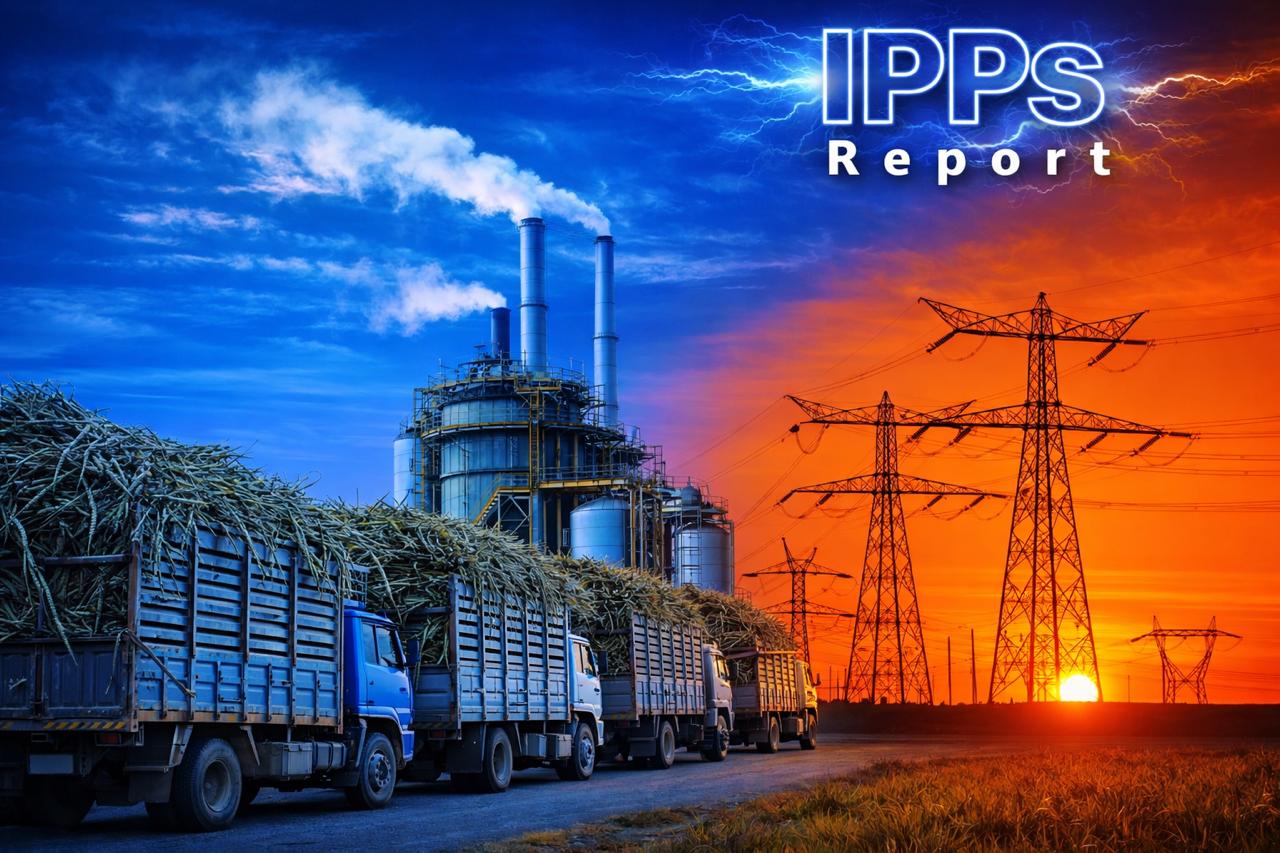
🔳 In June 2025, the Government of Pakistan raised Rs. 1.275 trillion from 18 commercial banks to settle outstanding payments owed to IPPs. Yet, driven by capacity payments and persistent line losses, this figure had climbed again to nearly Rs. 1.9 trillion by March 2026. This is not a conventional liability. It largely represents payments for electricity that was neither produced nor consumed.
The repeated re-accumulation of such massive sums within months has become a structural economic fault line. The central question is unavoidable: how long can this burden continue to be passed on to the public through electricity bills? With awareness now spreading among citizens, institutions can no longer afford indifference.
▫
The role of most Independent Power Producers in Pakistan has remained deeply contested. In practice, their financial structuring was engineered to minimise sponsor equity, often diverging from the spirit of regulation, while relying heavily on international financial institutions instead of domestic banking channels. The result was a fundamental imbalance: commercial risk shifted to the state and the public, while returns remained privately secured.
▫
Sixteen IPPs reportedly generated over Rs. 415 billion in profits against an investment of approximately Rs. 51.80 billion in a single year. Even this reported investment base, in several cases, remains open to serious question.
🔳 The IPP issue has moved far beyond high electricity tariffs. It now touches the core of Pakistan’s economic sovereignty and national security.
When Pakistan, under IMF conditionality, signed Islamic financing term sheets worth Rs. 1.275 trillion with 18 domestic banks in June 2025 to reduce circular debt and clear power sector arrears, a fundamental question emerged: why was the settlement of IPP dues made a precondition for fresh lending?
Why does the IMF prioritise clearing payments to IPPs, while showing far less urgency toward outstanding obligations owed to Pakistan’s domestic private sector, including sales tax refunds, export rebates, and support scheme liabilities? These dues have remained pending for years, with industry bodies such as APTMA repeatedly highlighting the issue.
Why, then, this asymmetry?
The answer began to take shape when I examined the project financing structure of a wind power IPP. Four key questions guided that inquiry:
🔳 The IPP issue has moved far beyond high electricity tariffs. It now touches the core of Pakistan’s economic sovereignty and national security.
When Pakistan, under IMF conditionality, signed Islamic financing term sheets worth Rs. 1.275 trillion with 18 domestic banks in June 2025 to reduce circular debt and clear power sector arrears, a fundamental question emerged: why was the settlement of IPP dues made a precondition for fresh lending?
Why does the IMF prioritise clearing payments to IPPs, while showing far less urgency toward outstanding obligations owed to Pakistan’s domestic private sector, including sales tax refunds, export rebates, and support scheme liabilities? These dues have remained pending for years, with industry bodies such as APTMA repeatedly highlighting the issue.
Why, then, this asymmetry?
The answer began to take shape when I examined the project financing structure of a wind power IPP. Four key questions guided that inquiry:
▫
️ Where was the debt sourced from?
▫
️ How much real equity was invested?
▫
️ Which international institutions were involved?
▫
️ When was the project initiated and at what capacity?
It was at this point that the presence of DFC and OPIC within the same financing structure became a revealing moment. The underlying logic of IMF insistence began to crystallise.
Under NEPRA regulations, project sponsors are required to inject 20 to 25 percent equity to ensure genuine risk participation. In practice, however, this principle was often circumvented.
Consider a simplified case: a project with an actual cost of 100 units. Instead of contributing 20 to 25 units in real equity, sponsors inflated the project cost on paper to 130 or 140, financed largely through external borrowing, and then reclassified a portion of this inflated cost as “equity.”
On paper, the equity requirement appeared satisfied. In reality, the sponsor’s out-of-pocket contribution could fall as low as 5 percent, or in some cases even approach zero. The remainder was debt, serviced through guaranteed payments embedded in consumer electricity tariffs.
In effect, ownership of billion-dollar assets was secured with minimal real capital exposure.
This structure was made possible by shifting away from domestic banking constraints toward foreign financial institutions, supported by sovereign guarantees from the Government of Pakistan. Local banks, bound by regulatory discipline, required genuine equity participation. External lenders, however, operated within a different framework.
Institutions such as the World Bank Group, the Asian Development Bank, and affiliated entities became central to this financing ecosystem. Given their integration within the global financial architecture and their close alignment with the IMF, ensuring timely repayment of such obligations becomes non negotiable.
This relationship is not incidental. The IMF and the World Bank, both products of the 1944 Bretton Woods framework, operate within a shared financial logic. One shapes macroeconomic discipline, the other reinforces it through project financing.
In this context, several IPP arrangements appear to have prioritised financial optimisation over national interest. External financing was secured on terms that ensured repayment certainty and protected returns, while transferring long term risk to the public sector.
A key question, therefore, is not simply how these projects were financed, but why international financial institutions became so dominant in Pakistan’s energy sector, while local capital remained marginal.
The Muhammad Ali Report of 2020 provides critical insight.
🔳 The IPPs Inquiry Committee Report, widely known as the Muhammad Ali Report, marked a turning point in exposing the financial architecture of Pakistan’s power sector. Led by Muhammad Ali, former Chairman of SECP, the committee brought together policymakers, security representatives, and economic experts.
For the first time, the report systematically highlighted cost inflation, contractual asymmetries, and structural inefficiencies embedded in IPP agreements.
Its key findings were stark:
1. Cost inflation and misdeclaration Project costs were overstated, inflating returns on equity to levels as high as 50 to 70 percent annually, far exceeding regulatory benchmarks.
2. Fuel inefficiency distortions Fuel consumption was overstated in certain cases, while efficiency gains were retained as profit rather than passed on to consumers.
3. Capacity payment burden Take or pay contracts obligated the state to pay regardless of actual electricity offtake, making capacity payments a primary driver of circular debt.
4. Dollar indexation Returns linked to the dollar exposed consumers to exchange rate volatility, even where underlying costs were largely domestic.
The report concluded that circular debt, which had already reached approximately 13 billion dollars, was not an accidental outcome but the product of systemic design failures.
Despite its significance, reform has remained partial and largely cosmetic. Core contractual structures continue to persist.
This raises a final and urgent question.
If Rs. 1.275 trillion was borrowed in June 2025 to clear dues, only for the liability to rise again to Rs. 1.9 trillion within months, how sustainable is this cycle? From where will the next bailout emerge?
Pakistan’s power sector is no longer facing a temporary imbalance. It is confronting a structural trap.
Without decisive reform, the burden will continue to compound, transferring today’s liabilities into the future.
Many readers ask for solutions. My position has remained consistent: a system must first be understood before it can be reformed. This series has therefore focused on clarity before prescription.
In the next episode, I will move from diagnosis to direction and present a practical pathway forward.
(Continued)
It was at this point that the presence of DFC and OPIC within the same financing structure became a revealing moment. The underlying logic of IMF insistence began to crystallise.
Under NEPRA regulations, project sponsors are required to inject 20 to 25 percent equity to ensure genuine risk participation. In practice, however, this principle was often circumvented.
Consider a simplified case: a project with an actual cost of 100 units. Instead of contributing 20 to 25 units in real equity, sponsors inflated the project cost on paper to 130 or 140, financed largely through external borrowing, and then reclassified a portion of this inflated cost as “equity.”
On paper, the equity requirement appeared satisfied. In reality, the sponsor’s out-of-pocket contribution could fall as low as 5 percent, or in some cases even approach zero. The remainder was debt, serviced through guaranteed payments embedded in consumer electricity tariffs.
In effect, ownership of billion-dollar assets was secured with minimal real capital exposure.
This structure was made possible by shifting away from domestic banking constraints toward foreign financial institutions, supported by sovereign guarantees from the Government of Pakistan. Local banks, bound by regulatory discipline, required genuine equity participation. External lenders, however, operated within a different framework.
Institutions such as the World Bank Group, the Asian Development Bank, and affiliated entities became central to this financing ecosystem. Given their integration within the global financial architecture and their close alignment with the IMF, ensuring timely repayment of such obligations becomes non negotiable.
This relationship is not incidental. The IMF and the World Bank, both products of the 1944 Bretton Woods framework, operate within a shared financial logic. One shapes macroeconomic discipline, the other reinforces it through project financing.
In this context, several IPP arrangements appear to have prioritised financial optimisation over national interest. External financing was secured on terms that ensured repayment certainty and protected returns, while transferring long term risk to the public sector.
A key question, therefore, is not simply how these projects were financed, but why international financial institutions became so dominant in Pakistan’s energy sector, while local capital remained marginal.
The Muhammad Ali Report of 2020 provides critical insight.
🔳 The IPPs Inquiry Committee Report, widely known as the Muhammad Ali Report, marked a turning point in exposing the financial architecture of Pakistan’s power sector. Led by Muhammad Ali, former Chairman of SECP, the committee brought together policymakers, security representatives, and economic experts.
For the first time, the report systematically highlighted cost inflation, contractual asymmetries, and structural inefficiencies embedded in IPP agreements.
Its key findings were stark:
1. Cost inflation and misdeclaration Project costs were overstated, inflating returns on equity to levels as high as 50 to 70 percent annually, far exceeding regulatory benchmarks.
2. Fuel inefficiency distortions Fuel consumption was overstated in certain cases, while efficiency gains were retained as profit rather than passed on to consumers.
3. Capacity payment burden Take or pay contracts obligated the state to pay regardless of actual electricity offtake, making capacity payments a primary driver of circular debt.
4. Dollar indexation Returns linked to the dollar exposed consumers to exchange rate volatility, even where underlying costs were largely domestic.
The report concluded that circular debt, which had already reached approximately 13 billion dollars, was not an accidental outcome but the product of systemic design failures.
Despite its significance, reform has remained partial and largely cosmetic. Core contractual structures continue to persist.
This raises a final and urgent question.
If Rs. 1.275 trillion was borrowed in June 2025 to clear dues, only for the liability to rise again to Rs. 1.9 trillion within months, how sustainable is this cycle? From where will the next bailout emerge?
Pakistan’s power sector is no longer facing a temporary imbalance. It is confronting a structural trap.
Without decisive reform, the burden will continue to compound, transferring today’s liabilities into the future.
Many readers ask for solutions. My position has remained consistent: a system must first be understood before it can be reformed. This series has therefore focused on clarity before prescription.
In the next episode, I will move from diagnosis to direction and present a practical pathway forward.
(Continued)