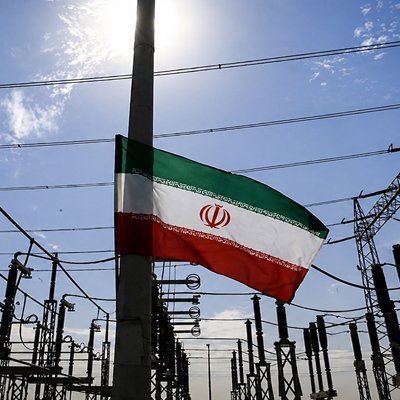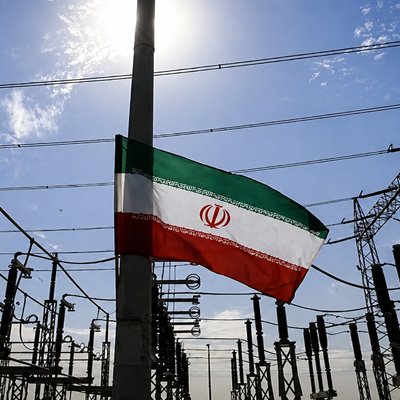


🔳 Coal-Based Electricity
▫
Who was the “mastermind” who decided to establish a mega project like the Sahiwal Power Plant hundreds of kilometres away from Port Qasim and the coal reserves of Thar? On what basis was this decision made? Was the logistics cost, and the future deadlock this project would create, not assessed at that time?
▫
Thar coal is located in Sindh, while the Sahiwal plant is situated in the centre of Punjab. A new 105-kilometre railway line is expected to be completed by June 2026. Until this railway line becomes operational, transporting millions of tonnes of Thar coal to Sahiwal will remain an extremely difficult and expensive process in practical terms.
▫
Interestingly, Lucky Electric, a 660 MW plant, was built for Thar coal, but due to weaknesses in the supply chain, it continued to run on imported coal.
▫
Through their electricity bills, the people first paid a readiness fee for coal-fired power plants, then paid the cost of electricity generation, then paid the cost of delivering electricity to the power system, and in return they received load-shedding.🔲 Public Investigative Series | Episode 34Topic: How Can Pakistan’s Electricity System Be Fixed?Title: Coal-Based Electricity, Part 1🔺 When institutions avoid providing facts, reaching the truth becomes the responsibility of the people.Written and researched by Syed ShayanPakistan’s real coal strength lies in Sindh, especially in Thar. According to available official figures, Sindh holds more than 99 percent of the country’s total coal reserves, while the Thar coalfield alone holds around 94 percent of Pakistan’s total reserves. The remaining reserves in Punjab, Khyber Pakhtunkhwa, Balochistan and Azad Kashmir together make up less than one percent.Therefore, no serious policy for coal-based power generation in Pakistan can be complete without placing Thar coal at its centre. The real issue is not merely the existence of coal, but its quality, mining cost, transportation cost, and its safe and economical supply to power plants.We now turn to Pakistan’s coal-fired power plants. The real questions for the public are: why were heavy payments made to these plants without receiving electricity from them according to their full capacity? Why was dependence on imported coal increased? Why was Thar coal not used in time? Why did coal transportation become so expensive? And why was electricity not obtained from these plants according to their full potential?Pakistan has 9 grid-connected coal-fired power plants. Of these, 7 are located in Sindh, 1 in Punjab, and 1 in Hub, Balochistan.The details are as follows:1. Sahiwal Coal Power Plant, 1,320 MW2. Port Qasim Coal Power Plant, 1,320 MW3. China Power Hub Coal Power Plant, 1,320 MW4. Engro Thar Coal Power Project, 660 MW5. Lucky Electric Power Project, 660 MW6. Hubco Thar Energy Project, 330 MW7. Shanghai Thar Coal Block 1 Project, 1,320 MW8. ThalNova Thar Coal Power Project, 330 MW9. Jamshoro Coal Power Plant, 660 MWThe total installed capacity of these 9 major coal power plants is 7,920 MW. However, in the last financial year, 2024-25, only an average of around 2,800 MW was obtained from them. This means that approximately 5,120 MW of capacity could not be used at all.In terms of units, these plants had the capacity to generate approximately 69.4 billion units of electricity, but in practice only 24.5 billion units were obtained. Around 44.9 billion units were not generated at all. This is the same unused capacity whose burden is added to public electricity bills in the form of capacity payments.Despite this, in financial year 2024-25, these plants were paid Rs 670 billion in capacity payments. According to NEPRA, out of this amount, Rs 256 billion was paid to Thar coal plants, while Rs 414 billion was paid to plants running on imported coal.It is important for readers to understand that this amount was not the price of actual electricity units. It was paid under the Capacity Purchase Price, or CPP.In IPP agreements, CPP is an important clause. It includes repayment of loans, return on investment, profit during the construction period, fixed O&M, insurance and other fixed expenses.NEPRA clearly states that these expenses are fixed. In other words, whether a plant runs less or more, this cost remains in place. When the utilisation of a plant is low, the same fixed cost is spread over fewer units, making per-unit electricity even more expensive for the public.The payments made to IPPs in this way are commonly known as capacity payments.The real question is this: when the nation did not receive electricity from these plants according to their full capacity, were these IPPs paid Rs 670 billion merely for sitting idle?And when the utilisation factor of imported coal plants was only 22.9 percent, Rs 414 billion in capacity payments were indeed paid to them under the terms of the contracts. But the question remains: why were these plants run at such a low level?According to NEPRA’s own written report, in financial year 2024-25, the Capacity Purchase Price of the entire CPPA-G system was approximately Rs 1,806 billion, which accounted for 61 percent of the total power purchase cost. Its average came to Rs 14.3 per unit.NEPRA itself acknowledged that the major reason for this high CPP was excessive installed capacity. In simple words, too many power plants were installed beyond actual need, and then those power plants were underused.You can understand this in another way as well.In financial year 2024-25, Rs 670 billion was paid in capacity payments to only 9 major coal power plants. But according to NEPRA, the Capacity Purchase Price of the entire CPPA-G system, including coal, gas, RLNG, nuclear, hydel, wind, solar and other power plants, was approximately Rs 1,806 billion.This means that capacity payments to coal plants alone made up almost 37 percent of the total.Just imagine: if there had been no IPPs, no capacity payments, no guaranteed returns and no dollar-indexed returns, and if the government had itself established power plants based on Thar coal, the real cost of electricity could have been far lower.Including fuel, O&M and transmission costs, the same electricity could have reached consumers at around Rs 14 to Rs 18 per unit. The only reason today’s bills are crossing even Rs 50 per unit is the wrong agreements made with IPPs.
▫
Deadlock over imported coal: government and IPPs face each otherPakistan’s three major imported coal-based mega power plants, Sahiwal, Port Qasim and China Hub, together have the capacity to generate 3,960 MW of electricity. These projects were established under CPEC and other partnerships, and they were designed as base-load plants so that the country could be provided with continuous electricity.Behind the scenes, the biggest struggle at the moment is that the government wants to convert these imported coal-based plants to Thar coal, but the IPPs are demanding further guarantees for the next 10 to 15 years in order to lock in their profits.The conversion of Sahiwal, Port Qasim and Hubco to Thar coal is not merely a matter of changing coal. It is linked to boiler design, coal quality, the transportation system and the financial interests built into power purchase agreements.The ultimate burden of this deadlock continues to grow in the form of circular debt.Why are major power plants such as Sahiwal, Port Qasim and Hubco, which run on coal imported from South Africa, Indonesia and Australia, hesitant to shift to Thar coal?On the surface, this question appears simple, but behind it lie 4 major reasons.The first reason is technical.The boilers of these plants were designed for imported coal, which has lower moisture and higher heat value. By contrast, Thar coal is lignite, which has higher moisture and lower heat value.For this reason, using Thar coal directly in the existing boilers is not easy. It would require expensive technical modifications.The second reason is the issue of blending.The IPPs argue that first, 20 to 30 percent Thar coal should be blended with imported coal and tested through pilot trials, because incorrect mixing can affect plant efficiency and damage machinery.The third reason is logistics.Thar is a desert region, and the railway network required for large-scale coal transportation is not yet fully ready. If coal is transported by trucks, transport costs can eliminate a major part of the economic advantage of local coal.The fourth and real reason is financial interest.The question from the IPPs is this: when they are already receiving capacity payments and profits under the existing Power Purchase Agreements even on imported coal, why should they make new investments?This is why, in return for shifting to Thar coal, they are demanding a 10 to 15 year extension in their agreements.These plants are already operating under long 30-year contracts. The agreement of the Sahiwal Coal Power Plant with the government runs approximately until 2047, the Port Qasim Coal Power Plant agreement runs approximately until 2048, and the China Hub Coal Power Plant agreement runs approximately until 2049.Despite this, their position is that conversion to Thar coal will require heavy expenditure on boiler adjustment, blending systems, coal upgrading and new logistics. Therefore, in return for this investment, they want an additional 10 to 15 year extension in the PPA.For the government, this is a difficult decision.If an extension is granted, the public will remain trapped in capacity payments for several more decades. If no extension is granted, dependence on imported coal will continue.This is the real deadlock at the heart of this entire crisis.[To be continued in the next episode.]