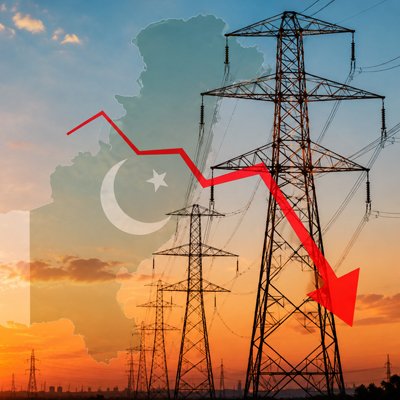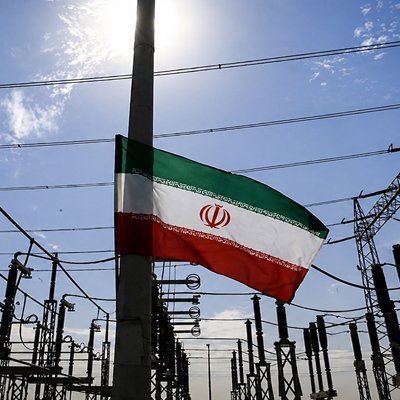

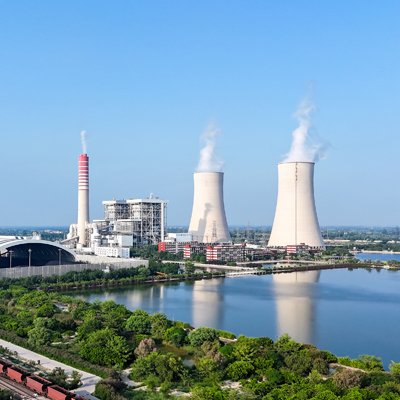
🔳 The Sahiwal coal-fired IPP has trapped Pakistan in a cycle of some of the world’s most expensive electricity. Finding a way out of this cycle has now become a major national challenge.
▫
On December 3, 2024, the world-renowned financial newspaper The Wall Street Journal wrote that Pakistan’s reliance on Chinese-built power plants is strangling its economy. Its exact words were:Pakistan’s Reliance on Chinese Built Power Plants Is Strangling Its Economy
▫
For Chief Minister Maryam Nawaz’s government, the real test is how it chooses to deal with a project like the Sahiwal Power Plant, which has become a heavy burden on the national treasury. One proposal currently being discussed is to shut the plant down, because Pakistan’s economy may not be able to carry its capacity charges until 2047.One option is for the government to shut down the plant, make a heavy settlement payment to the Chinese company, and try to get rid of the problem. But that would be a weak and unrealistic path.The better option is for the Maryam Nawaz government to make a smart policy move and establish a modern National Economic Zone in a nearby city within the Sahiwal Division, using this very plant as the energy base.This would allow the plant’s electricity to be absorbed by industry, reduce the burden of capacity charges, create employment, strengthen the local economy and, most importantly, place Pakistan in a stronger position to negotiate better terms with Chinese companies.If Maryam Nawaz understands this point with a clear political vision, the Sahiwal Power Plant can become the starting point of Punjab’s industrial revival. It can also help correct, to a considerable extent, a major national mistake made during the Nawaz Sharif and Shehbaz Sharif era as a result of haste, political expediency and poor planning.To turn this proposal into reality, the Maryam Nawaz government will have to move beyond traditional bureaucracy and adopt an “energy-plus-industry” model, or energy-led industrialisation.
▫
It is astonishing that the 1,320 MW Sahiwal Coal Power Plant was established on 690 hectares, or approximately 1,705 acres, of agricultural land. This land was handed over free of cost by the Punjab government to a Chinese company for power generation. Such disregard for land value is possible only in this country.For context, Lahore’s Allama Iqbal Town is spread over approximately 1,600 acres.
▫
The term “Punjab Speed” was used by Chinese officials and the Chinese ambassador to praise Shehbaz Sharif’s performance as Chief Minister, particularly the record-time completion of the Sahiwal Power Plant. But time has shown that this speed was, in fact, the speed with which the national economy was being pushed towards destruction.
▫
This project was inaugurated in April 2015 by Chinese President Xi Jinping and was described as a flagship prioritised project of CPEC. In other words, it was not an ordinary power plant. It was among the most prominent early-harvest projects of the China-Pakistan Economic Corridor.The most surprising development came in 2025, when the American think tank IEEFA, the Institute for Energy Economics and Financial Analysis, described the Sahiwal plant as a logical pilot for early retirement. According to its report, retiring this plant 5 to 10 years early may be financially less damaging than continuing capacity payments until 2046. It could also help avoid 27 to 38 million tonnes of carbon dioxide emissions.If this is the condition of CPEC’s flagship energy project, then one can only pray for the entire CPEC programme and hope that God brings it to a safe conclusion.
▫
The approved cost of the Sahiwal Power Plant was approximately $1.8 billion, or $1.37 million per MW. The objection is that, during the same period, similar plants in China, India and Bangladesh were being built at almost half this cost.Measured against global benchmarks, the cost of the Sahiwal plant should have been less than approximately $1.05 billion. On that basis, the project cost appears to have been inflated by around $700 million to $800 million, roughly Rs 75 billion to Rs 80 billion at that time. The burden of this inflated cost is still being borne by consumers through expensive tariffs, ROE and capacity payments.🔲 Public Investigative Series | Episode 35Topic: How Can Pakistan’s Electricity System Be Fixed?Title: Sahiwal Coal Power Plant, An IPP, A Story🔺 When institutions avoid providing facts, reaching the truth becomes the responsibility of the people.Written and researched by Syed ShayanJust as a dead person becomes unaware of the distribution or theft of his wealth, dead nations also watch their valuable resources, electricity, water, minerals and capital being looted in front of them while they remain silent spectators. I do not know who originally said this, but I am beginning this article with that thought.After writing the 34th episode of my series on how Pakistan’s electricity system can be fixed, I realised that this issue is not only about IPPs, coal, fuel or contracts. It is much bigger than that.The real question is how major decisions are made in this country, how their burden is shifted onto the public, and how national policies fail.That is why I have decided to begin a proper investigative series on all major coal power plants in Pakistan. Every plant has its own separate story. The owners are different, the flawed contracts are different, the capacity payments are different, and the fuel arrangements are different.Until these documented facts are placed before the public separately, the real depth of the crisis cannot be understood.During my research on the electricity crisis and IPPs, as more facts continued to surface, one question became increasingly serious: what thinking led our politicians, bureaucrats and senior leadership to approve such expensive projects?Did they not understand the grave consequences?The tragedy is that many of those responsible are still in power today and are making new agreements in the name of the public. Yet there is no one to question them.Despite this disappointment, as a writer, my duty is to write the truth, in the hope that perhaps one day someone in authority may read this, someone who has a sense of responsibility, the intention to reform, and the power to act, and may take practical steps to fix this system.
▪
️ Pakistan has approximately 11 coal-based power generation projects. At present, 9 major coal power plants are connected to the national grid. One smaller plant is connected to K-Electric’s system, while the Gwadar Coal Power Plant has not yet become fully operational.This shows that the issue is not only about energy. It is also about national planning.To understand any major IPP power plant, it is not enough to look only at its location or generation capacity. Its 30-year PPA, or Power Purchase Agreement, must be examined. Only then do the real financial liabilities, capacity payments, fuel costs, profits and government guarantees become clear.Therefore, when discussing any power plant, the real questions should be: during whose tenure was it approved, when did NEPRA and PPIB grant approvals, how was it moved forward under CPEC or a government framework, when did the PPA become effective, under which government did COD take place, and who were the decision-makers in the relevant institutions at that time?The first episode of this series, “An IPP, A Story,” is about the Sahiwal Coal Power Plant. It is a major 1,320 MW project and is counted among the prominent energy projects of CPEC.
▪
️ Establishing the Sahiwal Coal Power Plant in the very heart of Punjab is a clear example of poor planning and political showmanship. This is why experts consider its location a major structural mistake, the burden of which will be borne by Pakistan’s economy, agriculture and future generations until 2047.Why is this decision considered a national crime, or at least a serious policy and economic failure?There are several strong technical and environmental reasons behind this view.1. Loss of fertile agricultural land and threat to food securitySahiwal and its surrounding areas are known as the heart of Punjab. The region is famous for its highly fertile agricultural land and livestock.Installing a major coal power plant in such a fertile region, which helps meet the country’s food requirements, is considered a direct attack on agriculture. The ash and gases released from the plant affect land, crops and the surrounding environment.2. Logistical failure and the flawed logic of an inland plantCoal-fired power plants are usually established in coastal areas, such as Port Qasim or Gwadar, so imported coal can be transported directly from the port to the plant.For the Sahiwal plant, imported coal first lands at Karachi Port. From there, it is transported by rail over a distance of almost 1,200 kilometres to Sahiwal.This extremely long route places severe pressure on the railway network and sharply increases coal transportation costs, or freight costs. Ultimately, this burden is passed on to the public through fuel price adjustment.3. Environmental damage and worsening smogPunjab already suffers from severe smog and air pollution every winter.The gases released from the Sahiwal plant, including nitrogen oxides and sulphur dioxide, along with fine airborne particles such as PM2.5, further poison the air of the region.The direct impact is seen in human health, particularly in lung and respiratory diseases.4. Excessive use of groundwaterCoal power plants require hundreds of thousands of gallons of water for cooling.Sahiwal is located in an area where there is no major natural water reservoir or sea. Therefore, this plant depends on groundwater and the local canal system.As a result, the groundwater level in Sahiwal and its surrounding areas is falling rapidly, creating the risk of a serious future crisis in drinking water and agricultural water.5. Ignoring cheaper and cleaner alternativesWhen this plant was established, the world was already moving towards clean energy, especially solar and wind.Pakistan had vast potential for solar energy in Cholistan and wind energy in Jhimpir, where cheaper electricity could have been generated.At such a time, setting up an imported coal-based plant in the middle of the country’s agricultural heartland reflects a strategy of the Nawaz Sharif government that can only be regretted.6. The heavy burden of take-or-pay and capacity chargesThe Sahiwal Coal Plant is among those projects whose contracts were signed on a take-or-pay basis.This means that whether the Government of Pakistan purchases electricity from this plant or not, it must still pay billions of rupees in capacity charges to keep the plant available and to ensure recovery of the investor’s capital.Since this plant runs on imported coal and produces expensive electricity, it is often operated at low levels. Yet billions of rupees continue to go from the public’s pocket to this plant every month in the form of capacity payments.7. Dollar-linked electricity payments and forex drainThis plant was not designed for local coal such as Thar coal. It was built to run on imported coal from Malaysia, Indonesia, South Africa or other foreign sources.Whenever the dollar rises against the rupee, the import cost of coal automatically increases.As a result, the country’s precious foreign exchange is spent merely to meet the fuel needs of this plant. This has become a permanent burden on the national economy.8. Long-term carbon lock-inWhen a country signs a 30-year agreement for such a large coal power plant instead of investing in hydro, solar or wind, it becomes technically and legally trapped in a carbon lock-in.This means that despite global pressure for green energy and possible carbon taxes, Pakistan remains legally bound for decades to burn one of the most polluting fuels and continue paying for it.9. The difficulty of converting the plant to Thar coalWhen Pakistan decided to use its own local coal from Thar, there was discussion about converting, or retrofitting, the Sahiwal plant to run on Thar coal.In practice, however, this is not a simple option. The boiler technology of this plant was designed for high-quality imported bituminous coal, whereas Thar coal is lower-grade lignite.Using Thar coal would require major changes in the plant, costing billions of rupees.10. Pressure on grid stations and transmission lossesA basic principle of power generation is that electricity should either be produced close to load centres, where it is consumed, or close to the source of cheap fuel.The Sahiwal plant is neither close to any fuel source, port or coal mine, nor is it working as the cheapest option for the national grid.
▪
️ Today, in June 2026, the situation of this power plant has become even more serious.Think tanks such as IEEFA and government circles are now seriously discussing whether running this imported coal plant until 2047 could become a cause of Pakistan’s economic destruction.That is why one proposal under consideration is to pay Chinese companies a lump sum amount, estimated between $400 million and $1.5 billion, and retire the plant early. The reason is that the burden of capacity payments over the next 20 years could exceed $5 billion.On the other hand, the government is also negotiating with China on debt reprofiling.According to NEPRA’s latest performance report, in financial year 2024-25, approximately Rs 413 billion was paid in capacity payments alone to three major 1,320 MW imported coal-based plants: Sahiwal, Port Qasim and Hub.This means that, on average, each plant received around Rs 130 billion to Rs 140 billion annually, or approximately Rs 11 billion to Rs 12 billion every month, merely for being available to generate electricity. Whether we actually take electricity from them or not is a separate matter.And remember, this amount is separate from fuel costs and other surcharges.This should be enough to understand that the unit which was supposed to support the country as a base-load power source has itself become a victim of fuel supply issues and the personal weaknesses of rulers.Resources that could have been spent on hospitals, education, transport and cheap industrial electricity are now locked into fixed payments for a few major imported coal plants.
▪
️ What is the solution?The burden of take-or-pay contracts and capacity charges of the Sahiwal Coal Power Plant has grown so large that the real question now is whether Pakistan should continue making these payments until 2049, or choose a practical and less damaging path.It is not easy to unilaterally terminate the contracts of such large IPPs. Doing so could trigger international arbitration, claims under state guarantees, investor disputes and even sovereign default risks.In the case of the Sahiwal plant, four possible routes appear.1. Restructuring and renegotiation of contractsPakistan can negotiate to reduce dollar indexation, link payments to the rupee, reduce Return on Equity, and extend the repayment period of Chinese bank loans.If the loan repayment period is extended from 10 years to 20 or 25 years, the annual burden of capacity charges can be reduced.2. Converting take-or-pay into take-and-payAs long as the plant remains under a take-or-pay structure, the public will have to pay whether electricity is used or not.A better path is to gradually move it towards a take-and-pay model, so that payment is made only for the electricity actually used or supplied to the national grid.3. Increasing electricity demandIf the plant cannot be shut down, its electricity must be brought into productive use instead of being treated as surplus.Industrial parks near Sahiwal, cheaper industrial electricity, shifting captive power plants to the national grid, electric vehicles and electricity-based industrial use can increase demand.This can reduce the per-unit burden of capacity charges.4. Asset buyout and managed phase-outAround the world, under energy transition mechanisms, expensive and polluting coal plants are being retired early through international funds, the Asian Development Bank and climate financing.Pakistan should also prepare a buyout plan with the help of such institutions. Under this plan, Chinese investors can be paid a reasonable amount, the plant’s ownership can be acquired early, and then the plant can either be shut down, converted to Thar coal or another lower-cost model, or kept only for emergency use.⭕️ According to our think tank’s proposal, the real success of the government will now lie not in shutting the plant down, but in turning it from a burden on the national treasury into a source of local industry, employment and regional development.How can this be done?In the Okara district of Sahiwal Division, on both sides of the Depalpur-Okara Road, especially towards Hujra Shah Muqeem and Basirpur, there are large land parcels that have become barren due to waterlogging and salinity and are no longer suitable for cultivation.Because this land is unfit for agriculture, converting it into a special industrial zone could be relatively cheaper and easier.Industries such as textiles, leather and chemicals can be established there.Because of possible linkages with the National Highway N-5, the CPEC route, the Sulemanki border, alternative link roads and the Sahiwal power source, this area has strong potential to become an important future industrial belt or Special Economic Zone.If the government establishes a modern industrial park on 1,000 acres in this area and offers industrialists land, electricity, basic infrastructure and a tax-free or low-tax policy until 2040, it could become a major attraction for Pakistan’s industry.The FBR will apparently oppose such a policy, because it may have to give up around Rs 225 billion to Rs 265 billion in potential revenue over 20 years.But the real economic point is that this amount would still be less than the loss the government is already bearing in the form of capacity charges or a lump sum settlement.Therefore, instead of wasting cash payments, this would be a financial swap. Instead of immediate payment, the government would provide phased tax relief, make limited development spending, and in return generate industrial production, electricity consumption, employment, supply chains, local businesses, transport, services, indirect taxes and export opportunities.The biggest benefit of this industrial park would be the creation of a permanent dedicated load of 500 MW to 700 MW for the Sahiwal Power Plant.This would mean that the plant’s electricity would no longer remain a surplus burden. It would become raw material for industry.The plant’s utilisation would increase, pressure from unused electricity would fall, the burden of capacity payments on ordinary consumers could decline, and the government would be in a stronger position to negotiate with Chinese companies on reprofiling, reform of the take-or-pay model, reduction in Return on Equity and debt restructuring.Under this model, savings of around Rs 500 billion or more may be possible over 20 years, while 50,000 to 80,000 jobs could also be created.However, one important caution is necessary.Since the Sahiwal plant generates electricity from coal, products manufactured using this electricity may face the European Union’s Carbon Border Adjustment Mechanism, or CBAM.Therefore, the target market of this industrial zone should not be Europe. Instead, it should focus on Pakistan, Afghanistan, Africa, Central Asia and other non-European markets.Agrochemicals, packaging, food processing, agricultural machinery, low-cost construction materials and fly ash-based products would be more suitable for this zone.The final point is that paying billions of rupees in cash to shut down the Sahiwal Coal Power Plant, or simply trying to get rid of it, is a weak path.The better solution is to convert this financial burden into industrial policy.If the same facility is given to Pakistani industrialists through land, electricity and tax relief, this burden can become a new economic engine.Barren land can become an economic asset. Industry can rise. Employment can be created. Electricity can be consumed. And the pressure of capacity charges can be reduced.⭕️ We are now sharing some basic information about this plant with our readers, so that it becomes clear where the Sahiwal Coal Power Plant is located, what its capacity is, who operates it, who owns it, how long the agreement runs, who purchases the electricity, what the payment mechanism is, and what practical situation the plant faces today.
▫
The Sahiwal Coal Power Project was part of the government policy launched after 2013 during Pakistan’s electricity crisis.This project was linked to the Punjab government’s Chief Minister’s Coal Initiative 2014, the CPEC energy programme, and investment by the Chinese company Huaneng Shandong Ruyi.In April 2014, an MoU was signed in Lahore between the Punjab government and Shandong Ruyi Group. On May 21, 2014, the Punjab Power Development Board, or PPDB, issued a Letter of Interest to Huaneng Shandong Ruyi for a 2 x 660 MW imported coal power plant in Sahiwal.This project began during the federal government of Nawaz Sharif and the Punjab government of Shehbaz Sharif.At the provincial level, PPDB carried out the initial process. At the federal level, the IPP framework was completed through PPIB, NEPRA, CPPA-G and the Power Division.The investment, construction and operation were handled by Chinese companies, but the political and governmental responsibility for the project rests with Pakistan’s federal and Punjab governments.The real question remains: why was such a large imported coal power plant installed in the agricultural heart of Punjab, how were its financial liabilities determined, and why was its burden placed on the electricity bills of the public for decades to come?
▫
LocationThe Sahiwal Coal Power Plant is located in Qadirabad, District Sahiwal, Punjab.The plant is connected to the national grid, which means its electricity is supplied into Pakistan’s national electricity system.
▫
Generation capacityThe total generation capacity of this plant is 1,320 MW.It consists of 2 units of 660 MW each.
▫
TechnologyThe plant was built on supercritical coal-fired technology. This means it is relatively modern, but still fully coal-based.
▫
CompanyThe plant is operated by Huaneng Shandong Ruyi Pakistan Energy Private Limited.This company is known as HSRPEL.
▫
OwnershipFifty percent of the company’s shares are held by the Chinese company Huaneng Shandong Power Generation Company Limited. The remaining 50 percent are reportedly held by another Chinese company, Jining Chengtou or Shandong Ruyi Group.
▫
InvestmentThe project involved investment of approximately $1.8 billion to $1.9 billion.Different documents mention figures ranging between $1.808 billion and $1.912 billion.
▫
DebtAround 80 percent of the project cost was financed through debt.
▫
EquityApproximately 20 percent was contributed by the Chinese sponsors as equity, which comes to around $360 million.
▫
Lending banksThe debt was obtained from a consortium of Chinese state-owned banks, including Industrial and Commercial Bank of China, Bank of China, China Construction Bank and Agricultural Bank of China.
▫
Power purchaserElectricity from this plant is purchased by CPPA Guarantee Limited.
▫
Legal nature of the projectThis is an IPP project. The company sells electricity to the Government of Pakistan as an Independent Power Producer.
▫
Duration of the agreementThe Power Purchase Agreement of this plant is for approximately 30 years.The plant commenced on October 28, 2017, and according to available information, the agreement is expected to continue until October 28, 2047.
▫
Will the plant be transferred to the government?Available official records regarding the Sahiwal Coal Power Plant do not clearly state that ownership of the plant will be transferred to the government after 30 years.Some newspapers described it as a BOT, or Build Operate Transfer, project. However, the actual transfer clause of the agreements is not available in the public domain.Therefore, it is not correct to call it a verified BOT project. Based on available information, it is more appropriate to understand it as closer to a BOO, or Build Own Operate, structure, or a long-term IPP structure.
▫
Initial electricity tariffAccording to 2017 figures, the initial tariff of this plant was reported to be around Rs 9.19 per unit, including the basic electricity rate and coal transportation cost.
▫
Return on EquityIn this project, the sponsors are given an annual Return on Equity of approximately 27.2 percent on their invested equity.
▫
Basic payment mechanismThis plant does not receive payment only for the electricity it generates. It also receives capacity payments on the basis of availability.
▫
Minimum off-takeThe agreement includes the concept of minimum off-take or capacity guarantee. This means that even if full electricity is not taken from the plant, payment obligations up to a certain level remain in place.
▫
Sovereign guaranteeThis project has a sovereign guarantee from the Government of Pakistan. This means the final payment risk lies with the state.
▫
Nature of coalThe plant primarily runs on imported coal. Coal is usually sourced from Indonesia, South Africa, Australia and, during certain periods, Afghanistan as well.
▫
Annual coal requirementTo run this plant at full capacity, approximately 4.4 million tonnes of coal are required annually.
▫
EfficiencyThe plant’s efficiency is reported to be around 40 percent.
▫
TimelineThe MoU for this project was signed in 2013. The Letter of Intent was issued in 2014. Construction began in 2015. Both units became operational in 2017. The Commercial Operation Date was set as October 28, 2017.
▫
Construction periodThe plant was completed in approximately 26 months, and at that time it was counted among the fast-track CPEC projects.
▫
Electricity generationThe installed capacity of the Sahiwal Coal Power Plant is 1,320 MW.If this plant had operated continuously at full capacity from 2017 to 2025, it should have supplied approximately 92.5 billion units of electricity to the grid.However, according to official figures, by July 2025 it had supplied only a little more than 47.3 billion units.This means the plant generated around 51 percent of its theoretical capacity. In other words, only about half of its potential electricity was supplied to the national grid.The figures show that in 2021, the Sahiwal Coal Power Plant supplied around 7,700 GWh of electricity. After that, generation continued to decline.In 2022, it fell to around 4,855 GWh. In financial year 2023-24, according to NEPRA, it dropped to only 2,075.12 GWh, while plant utilisation was only 19.04 percent.According to NEPRA’s monthly data, generation from this 1,320 MW plant was zero in October 2023, November 2023 and March 2024.This means that for several months, the national grid received no electricity from this large imported coal plant.In financial year 2024-25 as well, according to NEPRA, the overall utilisation of imported coal plants remained 22.9 percent. Some reports placed this figure at around 19 percent.Even now, the situation is that, due to non-availability of coal, this plant is producing little to no electricity. Yet it still has to be paid around Rs 10 billion every month in capacity charges, at an annual rate of approximately Rs 117 billion.
▫
Allegations of expensive coal procurement and financial benefit to certain local parties, followed by inconclusive investigationsIn the coal procurement matter of the Sahiwal Coal Power Plant, Lucky Group raised the objection that Huaneng Shandong Ruyi, or HSR, structured its tenders in a way that benefited certain specific suppliers.The allegation was that when local market coal and Afghan coal were available for less than Rs 55,000 per tonne, coal for the Sahiwal plant was being purchased at around Rs 74,000 per tonne or even higher.This means that if the plant purchased 100,000 tonnes of coal annually at Rs 74,000 per tonne, the annual cost would be Rs 7.4 billion.If the same quantity had been purchased at Rs 55,000 per tonne, the cost would have been Rs 5.5 billion, creating a difference of Rs 1.9 billion annually.This is the very amount that is ultimately paid through consumers’ electricity bills or taxpayers’ money.The name of Abbas Corporation Karachi also surfaced in this matter. It was alleged that the company was given special advantage in the supply process, while other suppliers were kept out through strict conditions.The cost of this expensive procurement was included in electricity prices and ultimately passed on to the public through bills. This was an open injustice to the people.Questions were also raised about the role of the Power Division, CPPA-G, relevant government officials and the then Federal Power Secretary. Why was timely action not taken despite the dollar crisis and expensive electricity?Interestingly, the position of the Sahiwal Power Plant spokesperson was that the decision on coal procurement was not taken independently by the plant management. Rather, they were directed under relevant government or policy instructions to purchase coal from specific sources.According to the spokesperson, their job was to follow the instructions given to them. Therefore, whether coal was purchased cheaply or expensively, the real responsibility lay with the decisions under which the procurement method was determined.The result was that NEPRA’s fact-finding report did not declare the matter to be proven corruption, but it did point to non-transparent tendering and weak government oversight.Thus, it became a major coal procurement controversy, but for various reasons it was later suppressed.One reason the matter was suppressed was the possibility that action against Chinese companies under CPEC agreements could create diplomatic complications.But the facts remain that this issue is a sign of the wider lack of transparency in power plants built under CPEC.When a Chinese company like HSR was given control over both operation and coal procurement, a conflict of interest was bound to arise. The buyer was not separate, and the supplier was not truly independent.
▫
The cost of the Sahiwal Power Plant: was it in line with global standards?On the basis of the 2020 Power Sector Audit Committee report, commonly known as the Muhammad Ali Report, and NEPRA’s tariff record, serious questions were also raised about the approved cost of the Sahiwal Coal Power Plant.The plant has a generation capacity of 1,320 MW, and its paper cost was approved at approximately $1.8 billion. This means the cost per MW came to around $1.37 million.The objection was that, during the same period, similar coal power plants were being built in China and several other countries at relatively lower costs.According to the audit committee and independent energy experts, if a plant using the same technology could be built in other countries at a lower cost, why was the cost of the Sahiwal plant approved at such a high level in Pakistan?The concern regarding over-invoicing in the cost of the Sahiwal Coal Power Plant can be understood from the fact that when, in 2014-15, the total paper cost of this 1,320 MW plant for Pakistan was being approved at around $1.8 billion, or $1.37 million per MW, the actual EPC cost of similar supercritical technology plants inside China during the same period was between $0.5 million and $0.8 million per MW.If this international and Chinese benchmark had been used, the total cost of the Sahiwal plant should not have exceeded $1.05 billion.This means that the cost of this single project appears to have been inflated by around $700 million to $800 million through paper manipulation, which at that time was roughly Rs 75 billion to Rs 80 billion.In neighbouring countries such as India and Bangladesh, similar plants were also being built at an average cost of $0.7 million to $0.85 million per MW. Inside China itself, plants of this capacity were being built at even lower cost.But in Pakistan, NEPRA not only approved this front-loaded and inflated capital cost, it also allowed Chinese investors an extraordinary 27.2 percent Return on Equity on this alleged excess cost.Pakistani consumers are still paying the price of this decision in the form of expensive capacity payments.In brief, the Sahiwal Coal Power Plant appears to be a major 1,320 MW IPP, but the real issue is not its generation capacity.The real issue is its expensive agreement, payment mechanism, dependence on imported coal, low utilisation, and the capacity charges and Return on Equity that must be paid until 2047.That is why this plant is no longer merely an electricity generation project. It has become an important financial case study in Pakistan’s power sector.[To be continued in the next episode.]