Syed Shayan Real Estate Archive
Syed Shayan Real Estate Archive
From Real Estate History
Syed Shayan Real Estate Archive

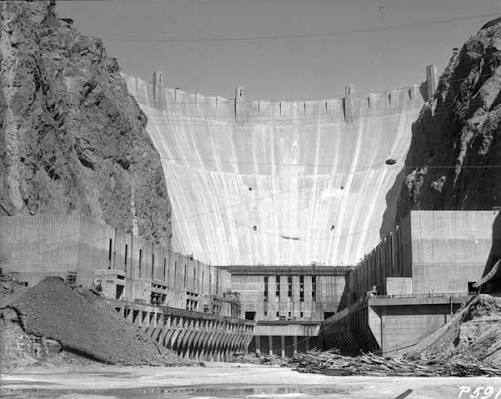
Hoover Dam was named after Herbert Hoover, the 31st President of the United States, who strongly supported the project before becoming president. The dam was also called Boulder Dam for some years, but in 1947 the U.S. Congress officially restored the name Hoover Dam. Preliminary construction work ...

The Kilmarnock and Troon Railway officially opened in Ayrshire, Scotland. It is widely regarded as Scotland’s first public railway line and one of the early transport projects that helped shape the relationship between infrastructure, land value and industrial development. The line connected Kilma...

On 5 July 1969, Walter Gropius, one of the most influential figures in modern architecture, urban planning and real estate design, passed away in Boston. Gropius was a German born architect, urban thinker and founder of the Bauhaus School, one of the most important design movements of the twentieth ...

One of the most important moments in modern political and urban history took place inside Independence Hall in Philadelphia, United States. On this day, the Declaration of Independence was approved, turning a civic building into a global symbol of freedom, public authority and national identity. Th...

On 3 July 1919, Helical Bar and Engineering Company Limited was incorporated in London. The company was originally established to manufacture and sell reinforcing steel for the construction industry, supporting building activity at a time when modern urban development was expanding across Britain. ...

1979: The Hoboken Land and Improvement Company Building in New Jersey was added to the National Register of Historic Places, recognising its architectural, commercial and urban development significance. Built in 1889, the building served as the office of the Hoboken Land and Improvement Company, a ...

La Maison Radieuse, a major collective housing project designed by renowned architect Le Corbusier, was inaugurated in Rezé near Nantes, France. The building became the second major example of Le Corbusier’s Unité d’Habitation concept, following his earlier work in Marseille, and reflected a b...

Hong Kong officially returned to Chinese sovereignty and became the Hong Kong Special Administrative Region under the “One Country, Two Systems” framework. This historic transition marked the end of 156 years of British administration and opened a new political, legal and economic chapter for on...

The historic handover ceremony of Hong Kong began, marking the end of more than 150 years of British administration and the transfer of Hong Kong to China as a Special Administrative Region. This event holds major importance in real estate history because Hong Kong has long been one of the world’...

U.S. President Dwight D. Eisenhower signed the Federal Aid Highway Act, a landmark law that created the Interstate Highway System. The act authorized the construction of a 41,000 mile national highway network and became one of the largest public infrastructure programs in American history. It was de...

The Treaty of Versailles was signed at the Palace of Versailles in France, officially bringing World War I to an end. While the treaty is primarily remembered for its political and diplomatic consequences, it also had a profound and lasting impact on real estate, housing, and urban development acros...

On this day, the Capital Development Authority (CDA) Ordinance was promulgated, providing the legal foundation for the establishment of the Capital Development Authority (CDA) to plan, regulate, and develop Islamabad as Pakistan’s new federal capital. The ordinance formally defined the authority�...

U.S. President Franklin D. Roosevelt signed the National Housing Act, a landmark law in the history of real estate and housing finance. Introduced during the Great Depression, the Act aimed to revive the struggling housing market, support the construction sector, and make home financing more stable...

China adopted its Land Administration Law on 25 June 1986, marking a major turning point in the management, protection and planned use of land. The law created a comprehensive legal framework for regulating land ownership, land use rights, agricultural land protection, construction land and land us...

In the aftermath of the mass displacement of Palestinians during the Nakba, the Israeli government enacted the Abandoned Property Ordinance. The ordinance gave the state control over properties belonging to Palestinians who had been expelled or had fled during the conflict. Three days later, the...
© syedshayan.com












































































































































.jpg)







.jpg)
























.jpg)
.jpg)
.jpg)



.jpg)